


Understanding the Importance of IT Vendor Management in Fort Worth
- IndustriousTechSolutions

- May 31
- 9 min read
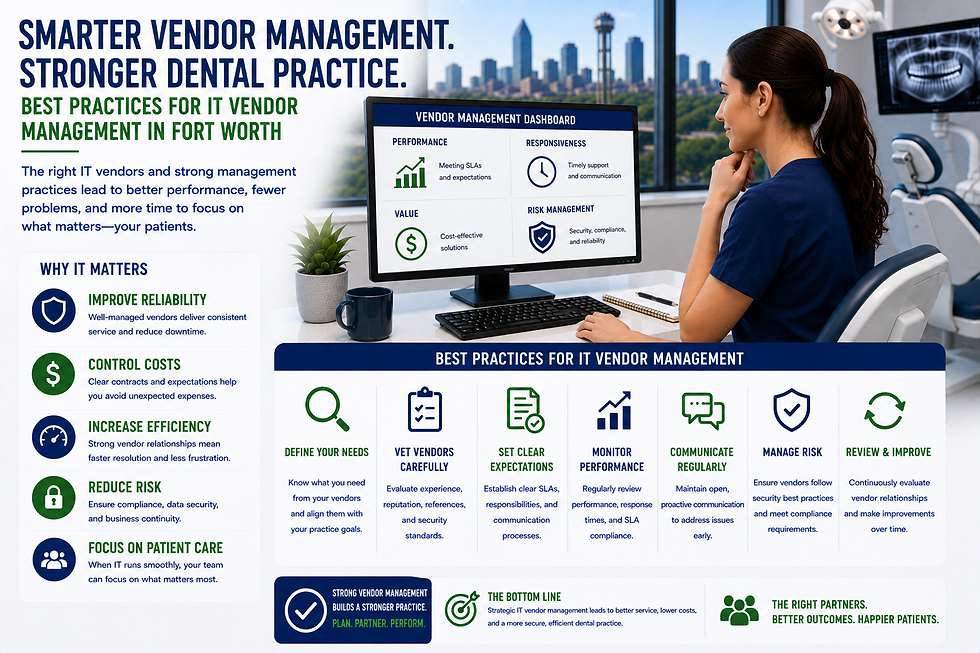
Defining Strategic Vendor Relationships
Effective technology management within a modern clinical environment requires a comprehensive strategy for overseeing the various partners who provide essential infrastructure services. For practitioners seeking reliable dental IT support, the process of vendor management serves as the foundation for operational stability and data security. In the competitive landscape of Fort Worth, ensuring that your technology partners are aligned with your specific clinical goals can mean the difference between seamless patient care and frequent technical disruptions that impact your practice revenue. A strategic relationship moves beyond a simple transactional service and instead focuses on long-term partnership where the vendor understands the unique workflows of a dental office.
The Impact on Daily Clinic Operations
When technology vendors are not managed with clear expectations, the result is often a fragmented infrastructure where different systems fail to communicate effectively. In a busy clinic, the reliability of the local area network, the server housing patient records, and the workstations in each operatory must be maintained with high availability. By implementing best practices for vendor oversight, office managers can reduce the time spent coordinating between different support desks, allowing the clinical team to focus on patient outcomes rather than troubleshooting connectivity issues. Robust management ensures that updates are performed during off-hours and that emergency support is available when critical systems encounter unexpected failures.
Cost Optimization and Resource Allocation
Properly managing your IT vendors also plays a significant role in the financial health of your organization. Without a centralized approach to vendor oversight, practices often find themselves paying for redundant services or maintaining legacy contracts that no longer provide value. By regularly reviewing vendor performance and contract terms, administrators in Fort Worth can identify opportunities for consolidation and negotiate better rates based on actual service utilization. This proactive approach to financial management ensures that your technology budget is being utilized effectively to support growth rather than merely maintaining inefficient systems that hinder productivity.
Key Selection Criteria for DFW Technology Partners
Industry-Specific Expertise and Experience
The dental industry has unique technological requirements that differ significantly from general business environments. When evaluating potential partners in the DFW metroplex, it is essential to prioritize those who have a deep understanding of dental practice management software and specialized imaging equipment. A vendor familiar with the intricacies of dental workflows will be better equipped to troubleshoot issues related to digital sensors, intraoral cameras, and practice management integrations. Choosing a partner with a proven track record in the dental field ensures that they are aware of common pitfalls and can provide proactive solutions tailored to the specific needs of your clinical staff.
Proximity and On-Site Support Capabilities
While many IT tasks can be handled through remote access, certain hardware failures and network issues require a physical presence. When selecting a provider, consider their ability to offer rapid on-site assistance for clinics located in Dallas or the surrounding suburbs. A local partner can provide faster response times for critical hardware replacements and physical infrastructure audits that remote-only providers simply cannot match. Having a technician who can arrive at your office quickly during a system-wide outage is a vital component of a comprehensive business continuity plan, minimizing the potential for lost production time and patient dissatisfaction.
Reputation and Peer References in North Texas
Before entering into a long-term agreement, it is prudent to conduct thorough due diligence by checking references from other dental practices in the region. Feedback from peer offices can provide valuable insights into a vendor's reliability, communication style, and ability to meet agreed-upon service levels. Ask potential vendors for case studies or references that demonstrate their ability to handle complex migrations or resolve long-standing technical challenges. A partner with a strong reputation in the North Texas dental community is more likely to uphold high standards of service and maintain the specialized knowledge necessary to support your practice's specific technology stack.
Compliance Standards and Regulatory Alignment in North Texas
Adhering to the HIPAA Security Rule
Regulatory compliance is a non-negotiable aspect of dental IT support, particularly concerning the protection of protected health information. The HIPAA Security Rule establishes national standards for protecting individuals' electronic personal health information that is created, received, used, or maintained by a covered entity. Your IT vendors must not only be aware of these standards but must also implement the technical, physical, and administrative safeguards required to ensure compliance. This includes the use of encrypted communication channels, secure data storage solutions, and rigorous access controls that prevent unauthorized individuals from viewing sensitive patient data.
Meeting Texas HB 300 and State Privacy Mandates
Practices operating in North Texas must also be cognizant of state-level regulations that may impose stricter requirements than federal law. Texas HB 300, which significantly amended the Texas Medical Records Privacy Act, expanded the definition of covered entities and introduced more stringent requirements for breach notification and employee training. It is imperative that your technology partners understand these local mandates and help your practice implement the necessary protocols to remain compliant. Failure to adhere to these state-specific rules can result in substantial penalties, making it essential to work with vendors who prioritize regulatory alignment as a core component of their service delivery.
Implementing NIST SP 800-63B Guidelines
To further enhance security, many practices are looking toward federal guidelines for digital identity and authentication. NIST SP 800-63B provides comprehensive recommendations for implementing multi-factor authentication and secure identity management practices. When managing IT vendors, ensure they are utilizing these guidelines to secure administrative access to your network and patient databases. By requiring vendors to follow established frameworks for digital identity, you reduce the risk of credential-based attacks and ensure that only authorized personnel can make changes to your critical systems. This level of technical oversight is a key best practice for maintaining a secure and resilient clinical environment.
Optimizing Practice Management Software Integration
Maximizing Dentrix and Eaglesoft Performance
The performance of your practice management software is central to the efficiency of your daily operations. Whether your clinic utilizes Dentrix or Eaglesoft, your IT vendor must be capable of optimizing the underlying server architecture and database configurations to ensure fast load times and reliable data retrieval. This includes managing regular software updates, monitoring database health, and ensuring that workstation hardware meets or exceeds the manufacturer's recommended specifications. A well-managed software environment reduces the likelihood of system crashes and ensures that clinical notes and patient records are always accessible when needed by your providers.
Managing Open Dental Cloud and Local Hybrid Models
As more practices move toward cloud-based or hybrid solutions, managing the connectivity between local hardware and remote servers becomes increasingly complex. For offices using Open Dental or similar platforms, your technology partner must ensure that your internet connectivity is both stable and secure. This involves implementing redundant internet connections and optimizing network traffic to prioritize practice management data. By managing the balance between local performance and cloud accessibility, your IT vendor can provide a seamless user experience that allows your team to work efficiently regardless of where the data is physically stored.
Facilitating Interoperability Between Systems
A modern dental practice often relies on a variety of third-party applications, ranging from patient communication tools to advanced imaging software. Ensuring that these disparate systems can communicate effectively is a primary responsibility of effective vendor management. Your IT partner should act as a central coordinator, working with various software providers to resolve integration issues and ensure that data flows smoothly between your practice management system and other clinical tools. This level of interoperability reduces manual data entry, minimizes errors, and provides a more cohesive technological ecosystem for your staff and patients.
Structuring Effective Service Level Agreements
Defining Response Times and Resolution Goals
A Service Level Agreement is a critical document that outlines the expected performance standards for your technology partners. It should clearly define response times for different levels of technical issues, ranging from minor workstation glitches to critical server failures. For practices in Fort Worth, having a guaranteed window for resolution ensures that technical problems do not linger and cause extended disruptions to patient care. These agreements should be reviewed regularly to ensure they remain aligned with your practice's evolving needs and that your vendor is consistently meeting the agreed-upon benchmarks for service delivery.
Establishing Accountability for Hardware and Software
The agreement should also clearly delineate responsibilities for hardware maintenance and software support. This prevents situations where different vendors blame each other for a technical failure, leaving the practice in a difficult position. By establishing clear lines of accountability, you ensure that your IT partner takes ownership of resolving complex issues, even when multiple vendors are involved. This comprehensive approach to support ensures that your practice has a single point of contact for all technology-related concerns, streamlining the resolution process and reducing the administrative burden on your office manager.
Scalability and Future-Proofing Provisions
As your practice grows, your technology needs will inevitably change. An effective agreement should include provisions for scalability, allowing you to add new workstations, operatory equipment, or satellite locations without undergoing a complete contract renegotiation. Your vendor should be a proactive partner in planning for future growth, providing recommendations for infrastructure upgrades that will support your long-term objectives. By including these forward-looking provisions in your vendor agreements, you ensure that your technology infrastructure can adapt to the changing needs of the North Texas dental market.
Cybersecurity and Data Integrity Oversight in Dallas
Managing Third-Party Access and Authentication
One of the most significant security risks for any dental practice is the access granted to third-party vendors. In Dallas, where cybersecurity threats are increasingly sophisticated, it is essential to implement strict controls over who can access your network and what actions they can perform. This includes the use of unique credentials for each vendor, the implementation of least-privilege access models, and the requirement for multi-factor authentication for all remote connections. Regularly auditing vendor access logs allows you to ensure that third-party partners are only accessing your systems when necessary and that their activities are consistent with their service obligations.
Regular Vulnerability Assessments and Patching
Maintaining a secure network requires ongoing vigilance and the regular application of security patches. Your IT vendor should be responsible for conducting periodic vulnerability assessments to identify potential weaknesses in your infrastructure before they can be exploited by malicious actors. This proactive approach to security involves not only updating operating systems and applications but also ensuring that network hardware like firewalls and switches are running the latest firmware. By staying ahead of emerging threats, your technology partner helps protect your practice from data breaches and ensures the continued integrity of your patient records.
Backup and Disaster Recovery Verification
Data loss can be catastrophic for a dental clinic, making it essential to have a robust backup and disaster recovery plan in place. Your vendor management strategy should include regular verification of backup integrity and periodic testing of the recovery process. It is not enough to simply have a backup system; you must be certain that the data can be restored quickly and accurately in the event of a hardware failure or ransomware attack. A reliable IT partner will provide detailed reporting on backup status and work with you to ensure that your practice can recover its critical data with minimal downtime, preserving both your reputation and your operational continuity.
Long-Term Relationship Management and Performance Audits
Conducting Quarterly Business Reviews
To ensure that your technology partners continue to provide value, it is essential to conduct regular performance reviews. These meetings provide an opportunity to discuss recent service trends, review adherence to service level agreements, and identify areas for improvement. For dental offices in the DFW area, these reviews are a chance to align IT strategy with upcoming clinical goals, such as the introduction of new diagnostic technology or the expansion of the facility. By maintaining open lines of communication, you can foster a collaborative relationship that encourages your vendor to be proactive in supporting your practice's success.
Evaluating Technical Alignment with Growth Goals
As technology evolves, the solutions that once served your practice may no longer be the best fit. During your regular audits, evaluate whether your current vendor's technical capabilities and service offerings remain aligned with the direction of your clinic. This may involve assessing their expertise in emerging areas such as artificial intelligence in diagnostics or advanced cloud-based imaging solutions. If a vendor is unable to keep pace with the technological advancements in the dental field, it may be necessary to explore other partners who can provide the sophisticated support required for a modern, high-growth practice in North Texas.
Navigating Contract Renewals and Transitions
Managing the end of a vendor relationship is just as important as the selection process. When a contract approaches its renewal date, take the time to conduct a comprehensive market analysis to ensure you are still receiving competitive pricing and high-quality service. If you decide to transition to a new provider, your current vendor should be required to provide a smooth handoff of all documentation, credentials, and configuration data. A well-managed transition ensures that there is no gap in support and that your new partner can take over the management of your infrastructure with a clear understanding of its current state and historical challenges.
Key Takeaways for IT Vendor Management
Vendor Alignment: Select partners who demonstrate deep expertise in specialized dental software and clinical workflows to ensure operational stability.
Local Support: Prioritize vendors in the Fort Worth area who can provide rapid on-site assistance for critical hardware failures and infrastructure needs.
Regulatory Compliance: Ensure all technology partners strictly adhere to the HIPAA Security Rule and the specific requirements of Texas HB 300.
Structured Agreements: Utilize detailed Service Level Agreements to define clear response times, resolution goals, and vendor accountabilities.
Security Protocols: Implement NIST SP 800-63B guidelines and strict multi-factor authentication for all third-party access to your network.
Performance Auditing: Conduct regular quarterly business reviews to evaluate vendor performance and ensure technical alignment with practice growth.
System Interoperability: Require vendors to coordinate effectively to ensure seamless data flow between practice management and imaging systems.
Disaster Readiness: Regularly verify the integrity of data backups and test disaster recovery protocols to protect against data loss.
Mastering the complexities of technology oversight is essential for any modern clinical director or office manager. By establishing rigorous selection criteria, enforcing strict compliance standards, and maintaining open communication with your partners, you can build a resilient infrastructure that supports both your team and your patients. Investing the time to properly manage these relationships will lead to a more stable, secure, and efficient practice that is well-positioned for future success. If you are ready to elevate your practice with professional oversight, consider the benefits of expert dental IT support for DFW dental practices today.


Comments